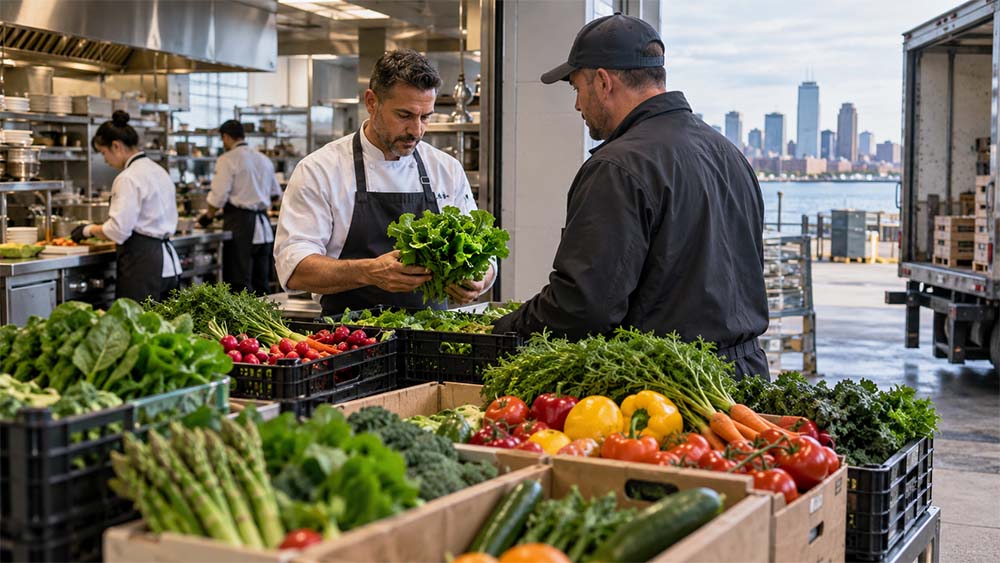
For restaurants, hotels, schools, healthcare facilities, caterers, markets, and other foodservice operations, choosing the right produce supplier is an important business decision. Freshness matters, but so do consistency, dependable delivery, product availability, responsive service, and a supplier that understands the needs of Boston-area businesses.
If you’re searching for Boston produce or trying to choose a wholesale produce supplier in Boston, there are several important factors to consider. The right supplier should do more than simply deliver fruits and vegetables. They should become a reliable part of your operation and help you consistently serve your customers.
What Is a Wholesale Produce Supplier?
A wholesale produce supplier provides fresh fruits, vegetables, and related products to businesses and organizations that need produce in larger quantities and on a regular basis. Unlike a traditional grocery store or retail market, wholesale suppliers are equipped to meet the ongoing purchasing and delivery requirements of commercial customers.
Customers may include restaurants, hotels, caterers, schools, healthcare facilities, corporate cafeterias, markets, institutions, and other businesses throughout the foodservice industry.
For these organizations, a dependable produce supplier can be an essential link between growers, distributors, and the kitchens and facilities serving food every day.
1. Look for Consistent Produce Quality
Quality should be one of the first considerations when choosing a Boston produce supplier. Your customers ultimately see and taste the ingredients you purchase, so the quality of your produce can directly affect the quality of the meals and products you serve.
A strong wholesale supplier should focus on providing fresh, high-quality fruits and vegetables while maintaining consistency from one delivery to the next.
This is especially important for restaurants and foodservice businesses where appearance, flavor, texture, and shelf life can all affect the finished product.
2. Freshness Matters
Fresh produce has a limited shelf life, making efficient sourcing, handling, storage, and delivery especially important.
When evaluating Boston produce companies, ask how the supplier manages its products from the time they are received until they reach your business. Proper handling and an efficient distribution process can help maintain freshness and reduce unnecessary waste.
Fresher produce can also provide greater flexibility in the kitchen because products may remain usable longer after delivery.
3. Dependable Delivery Is Critical
A restaurant cannot simply stop serving salads because the lettuce didn’t arrive. A caterer cannot tell a client that an important ingredient was missing from the delivery. Foodservice operations depend on their suppliers to deliver the products they need when they need them.
That’s why reliability should be a major factor when selecting a wholesale produce supplier.
Businesses should consider the supplier’s delivery capabilities, service area, scheduling, communication, and ability to consistently fulfill orders. A dependable delivery schedule helps kitchens plan inventory, control waste, and keep daily operations running smoothly.
4. Choose a Supplier That Understands the Boston Market
Boston has a diverse and demanding foodservice industry that includes everything from neighborhood restaurants and independent markets to universities, hospitals, hotels, corporate dining operations, and large institutions.
Working with a Boston produce supplier that understands the local market can be valuable. Local knowledge can help a supplier understand delivery requirements, changing customer needs, seasonal demand, and the fast pace of Boston’s foodservice industry.
A supplier familiar with the region is also better positioned to develop long-term relationships with customers throughout Boston and the surrounding communities.
5. Product Selection Is Important
Every foodservice operation has different needs. A restaurant may require a broad selection of fresh vegetables, herbs, and specialty items, while an institution may need larger quantities of staple fruits and vegetables.
When comparing wholesale produce suppliers, consider whether they can provide the variety of products your organization regularly uses.
A supplier with a broad product selection can simplify purchasing and help reduce the need to coordinate orders with multiple vendors.
6. Consider Consistency, Not Just Price
Price will always be part of the purchasing decision, but the lowest price doesn’t necessarily provide the best overall value.
Inconsistent quality, missed deliveries, short shelf life, or incorrect orders can create costs that aren’t immediately visible on an invoice. Spoilage and waste can increase food costs, while missing ingredients can disrupt kitchen operations and affect customer service.
When comparing Boston produce suppliers, consider the complete value of the relationship, including product quality, reliability, availability, service, and communication.
7. Communication and Customer Service Make a Difference
Produce purchasing isn’t always predictable. Menus change. Customer demand fluctuates. Events create unexpected needs. Products can also be affected by weather, growing conditions, transportation issues, and seasonal availability.
Good communication becomes especially valuable when circumstances change.
Your produce supplier should be responsive when you have questions about an order, need assistance locating a product, or have an unexpected change in your requirements.
A strong supplier relationship is built on communication and trust, not simply transactions.
8. Ask About Seasonal Produce and Availability
Produce availability changes throughout the year. Seasonality, growing regions, weather conditions, and market demand can all influence availability, quality, and pricing.
An experienced wholesale produce company can help customers understand these changes and make informed purchasing decisions.
Restaurants in particular may benefit from working with a knowledgeable supplier when developing seasonal menus or looking for alternatives when certain products become difficult to source.
9. Consider Food Safety and Proper Handling
Food safety should always be an important consideration when selecting any food supplier.
Produce should be handled, stored, and transported appropriately throughout the distribution process. Businesses evaluating a supplier should feel comfortable asking questions about its handling procedures, facilities, transportation, and food safety practices.
Working with a professional produce supplier helps provide confidence that your products have been handled responsibly before arriving at your facility.
10. Look for a Long-Term Produce Partner
The best supplier relationships often become partnerships.
As a produce supplier becomes familiar with your business, ordering patterns, preferences, and priorities, they can better understand what you need. That familiarity can make ordering easier and communication more efficient.
Rather than choosing a supplier based solely on individual orders, consider whether the company has the service, experience, and capabilities to support your business over the long term.
Who Needs a Wholesale Produce Supplier in Boston?
Wholesale produce suppliers serve many different types of organizations throughout the Boston area, including:
- Restaurants and restaurant groups
- Hotels and hospitality businesses
- Caterers and event venues
- Schools and universities
- Hospitals and healthcare facilities
- Corporate cafeterias
- Markets and food retailers
- Institutions and foodservice operations
Although their menus and purchasing requirements may be very different, these organizations share a common need: dependable access to quality fresh produce.
Questions to Ask a Boston Produce Supplier
Before choosing a wholesale produce company, consider asking questions such as:
- What areas do you deliver to?
- What types of fruits and vegetables do you regularly carry?
- How frequently can you deliver?
- How do you maintain product quality and freshness?
- Can you help source products that aren’t regularly stocked?
- How do you communicate product shortages or substitutions?
- What types of businesses do you typically serve?
- How do you handle questions or issues with an order?
The answers can tell you a great deal about whether a supplier is a good fit for your organization.
Choosing the Right Boston Produce Company
When businesses search for Boston produce, they aren’t simply looking for fruits and vegetables. They’re looking for a company they can depend on.
Quality, freshness, product selection, reliable delivery, communication, and customer service all contribute to a successful supplier relationship. Choosing a company that understands the needs of Boston’s foodservice community can help your organization operate more efficiently while consistently providing quality food to the people you serve.
Alphas Produce: Serving the Boston Area
Alphas Produce provides fresh produce and dependable service to customers throughout the Boston area. We understand that our customers rely on their produce supplier to deliver quality products and responsive service consistently.
Whether you operate a restaurant, hospitality business, institution, market, or another foodservice organization, our goal is to develop lasting relationships by helping you get the produce you need to keep your operation moving.
If you’re looking for a Boston produce supplier, contact Alphas Produce to learn more about our products, service, and delivery capabilities.
Frequently Asked Questions About Boston Produce Suppliers
What should I look for in a Boston produce supplier?
Look for consistent product quality, freshness, dependable delivery, a strong product selection, responsive customer service, and experience serving businesses in the Boston area.
What types of businesses use wholesale produce suppliers?
Wholesale produce suppliers commonly serve restaurants, hotels, caterers, schools, universities, healthcare facilities, markets, corporate cafeterias, institutions, and other foodservice operations.
Why is reliable produce delivery important for restaurants?
Restaurants depend on having the ingredients required for their menus. Reliable delivery helps kitchens maintain inventory, prepare menu items consistently, reduce disruptions, and better manage food costs and waste.
Does produce availability change throughout the year?
Yes. Growing seasons, weather, transportation, market demand, and growing regions can affect the availability, quality, and price of fresh produce throughout the year.
Is price the most important factor when choosing a wholesale produce supplier?
Price is important, but businesses should also consider freshness, quality, reliability, product availability, service, communication, and potential waste when evaluating the overall value provided by a supplier.
Why choose a local Boston produce company?
A produce company familiar with Boston and the surrounding area can better understand local delivery requirements, customer needs, seasonal demand, and the expectations of the region’s foodservice businesses.
How can I learn more about Alphas Produce?
Contact Alphas Produce to discuss your produce requirements, service area, product needs, and delivery options.